Slow Breathing
Regulating your breathing rate directly influences your heart rate and nervous system. Each inhalation speeds your heart slightly; each exhalation slows it and triggers the relaxation response (Hirsch & Bishop, 1981). Slowing to around six breaths per minute can markedly reduce anxiety and tension (Clark & Hirschman, 1990; Lehrer & Gevirtz, 2014).
Baseline Breathing Rate
Sit quietly with a stopwatch and count how many full breaths (inhale + exhale) you take in one minute. Enter the number you counted below.
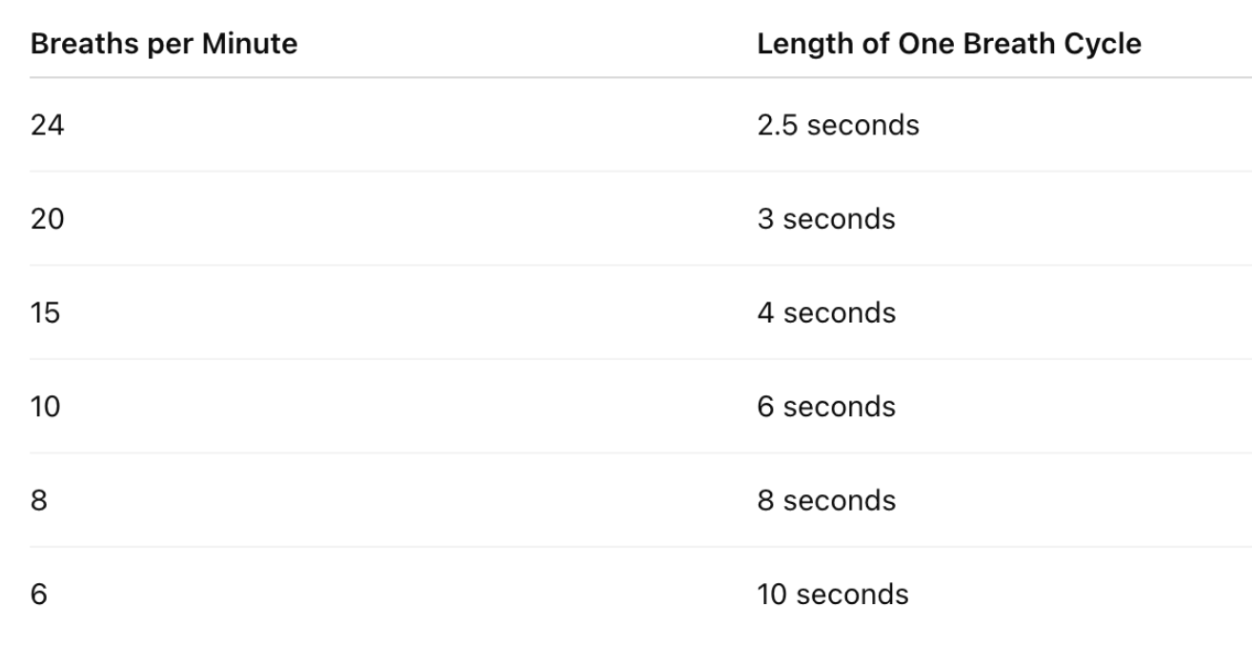
Breath-Length Chart
Match your baseline rate to the approximate length of one breath cycle.
Practising Slow Breathing
Choose a quiet, comfortable spot and set a timer for 3-5 minutes. Begin inhaling through your nose and exhaling through your mouth. Aim to reduce your rate by one row on the chart every few days or weeks until you reach your target.
Monitoring for Discomfort
If you feel dizzy, light-headed or notice tingling in your lips or fingertips, pause and return to your normal breathing rate. These signs suggest over-regulation. Resume later at a slightly slower pace.
Scheduling Your Slow-Breathing Practice
Decide on a day and time for daily practice this week. Note below when you will do it and which rate you will aim for.
Relaxation Rating
How relaxed do I feel BEFORE practising slow breathing?
How relaxed do I feel AFTER practising slow breathing?
Fewer clicks. More care.
One place for your team, your clients, and every clinical workflow, so nothing quietly slips through the cracks.
Free for practices with up to 20 clinicians.