Radical Acceptance Worksheet W3
Learning how to reduce suffering by accepting what is
Section 1: What is Radical Acceptance
Radical acceptance means fully acknowledging your current reality without judgment, blame, or resistance. It doesn’t mean approving of what happened or giving up-it means choosing to stop fighting things you cannot change. This mindset can reduce emotional pain and help you focus on what’s within your control. When you stop trying to change the past or deny reality, you create space to respond more calmly and clearly to what’s happening now.
Section 2: Why Radical Acceptance Matters
Fighting against reality increases suffering. Being angry that something happened or wishing it hadn’t keeps you stuck. Radical acceptance helps you let go of that fight and respond in a way that is more peaceful and useful. It helps you see things as they are-not better or worse-just as they truly are. Accepting reality is the first step toward deciding what to do next.
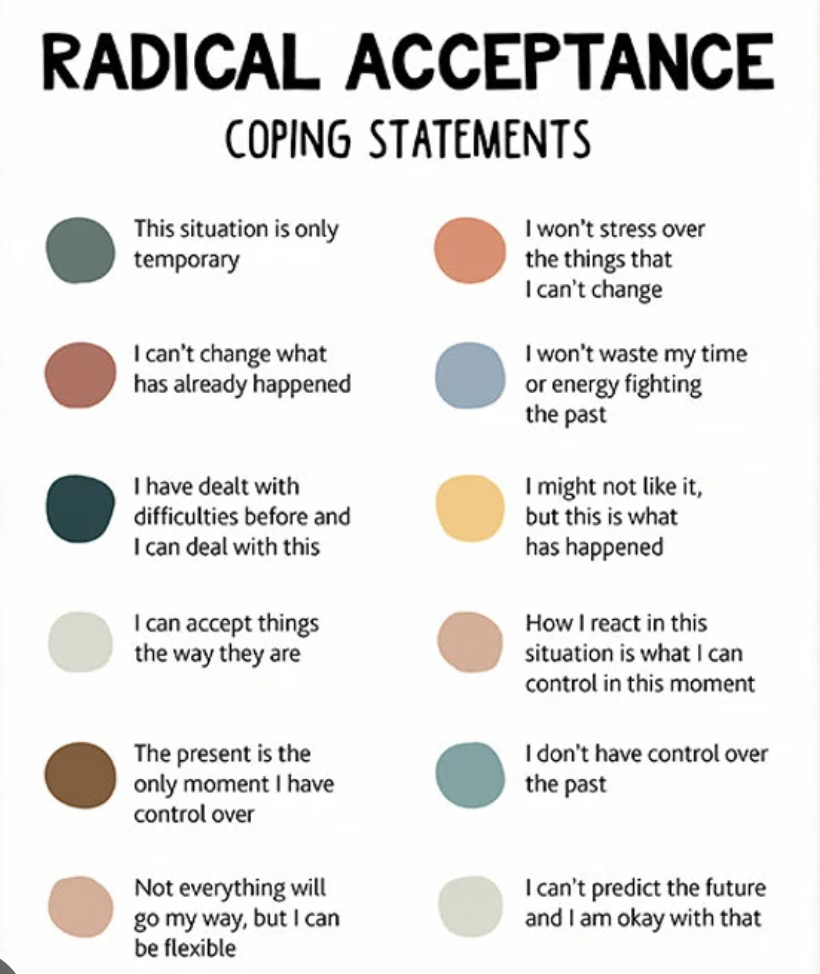
Section 3: Radical Acceptance Coping Statements
Below are common statements people use to remind themselves to accept what is. Read through the list and choose two or three that feel most helpful to you. You can also write your own. Examples include: This is the way it has to be. All the events have led up to now. I can’t change what’s already happened. It’s no use fighting the past. Fighting the past only blinds me to my present. The present is the only moment I have control over. It’s a waste of time to fight what’s already occurred. The present moment is perfect, even if I don’t like what’s happening. This moment is exactly as it should be, given what’s happened before it. This moment is the result of over a million other decisions.
Write down your top three coping statements for radical acceptance:
Section 4: Radical Acceptance Practice
Now it’s time to try using radical acceptance in real life. Start small by choosing situations that are frustrating but not highly emotional. The goal is to practice accepting these moments without judgment or trying to change them.
Choose one or more of the following to try this week:
What situation will you practice radical acceptance with first?
What coping statement will you remind yourself of during that situation?
Final Reflection
Radical acceptance doesn’t change what happened-but it can change your relationship to it. The more you practice, the easier it becomes to stay grounded, even when life is painful or uncertain. Let me know if you’d like a version with checkboxes, a simplified format for teens, or a version tailored for trauma-related work
Fewer clicks. More care.
One place for your team, your clients, and every clinical workflow, so nothing quietly slips through the cracks.
Free for practices with up to 20 clinicians.