Distract your Thoughts W6
A DBT worksheet for coping with distressing memories and overwhelming emotions
Section 1: Why Distracting Your Thoughts Helps
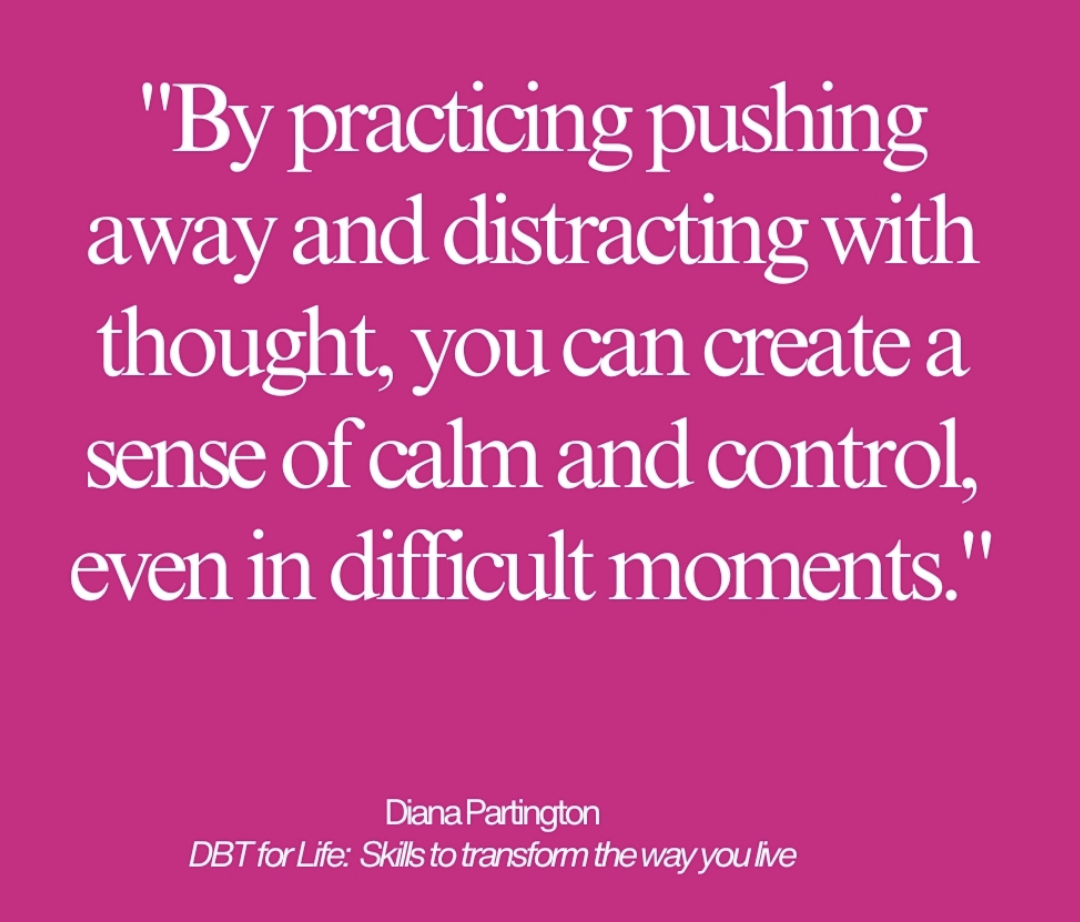
Our brains constantly generate thoughts-some helpful, others distressing. When you try to push a painful thought away, it often returns even stronger. That’s why forcing yourself to forget a memory or emotion usually doesn’t work. Instead, DBT encourages using distraction techniques to gently shift your attention to something neutral, calming, or positive. This doesn’t mean ignoring pain forever-it means choosing to pause the spiral so you can regain control.
Section 2: Imagery and Mental Distraction Tools
Below are some mental distraction tools that involve imagination, memory, or visualization. Tick the ones you’re open to trying.
Write your ideas here
Section 3: Practice Plan
Which distraction method above are you willing to try today?
When do you plan to use it (what situation or feeling)?
Where can you keep a reminder of this strategy so you remember to use it?
Section 4: Real-Life Example
Joel used to feel overwhelmed by painful memories. He created a distraction plan where he imagined himself as a child confronting someone who hurt him. He described everything he wished he had said. He used that visualization each time the memory returned. It didn’t erase his pain-but it helped him feel calmer and more in control.
Section 5: Final Reflection
What are some painful memories or recurring thoughts that you might use this strategy with?
How do you want to feel after using a distraction technique?
What reminder or statement could you keep in mind to help you practice distraction instead of suppression?
Fewer clicks. More care.
One place for your team, your clients, and every clinical workflow, so nothing quietly slips through the cracks.
Free for practices with up to 20 clinicians.