Private practice · Sep 2, 2026 · 16 min read
How to start a private practice: the complete guide
From business entity to first client: every decision you need to make to launch a practice, in order, with the mistakes that cost new practices the most time and money.
Starting a private practice is one of the few career moves that gives you control over your schedule, your clinical approach, and your income. It is also a business launch, and the clinicians who struggle are almost never the ones who lack clinical skill. They are the ones who treated the business side as an afterthought.
This guide walks the whole path in order. Follow it as a checklist and you will avoid the expensive detours: choosing the wrong entity, applying to payers before you can receive payments, or signing a lease your revenue cannot support yet.
Decide on your model before anything else
Three questions define your model. Will you take insurance, work cash-pay only, or run a hybrid? Will you practice solo or build toward a group? Will you see clients in person, by telehealth, or both?
Hybrid is the most common answer: panel with a few payers that reimburse well in your area while keeping cash-pay slots for clients who want flexibility. Your answer determines everything downstream, including your fee schedule, your software requirements, and how much working capital you need.
Handle the legal and financial foundation
Form a business entity, most often a PLLC or an LLC depending on your state's rules for licensed professionals, and get an EIN from the IRS. Open a dedicated business bank account. Separating personal and business finances from day one is the cheapest piece of advice that saves the most pain later.
Buy professional liability insurance before you see anyone. Get a business phone number, a professional email on your own domain, and a simple services agreement reviewed by an attorney familiar with your state.
Get your NPI and start payer applications early
If you will bill insurance, you need an NPI Type 1 (individual) and, if you form a group, an NPI Type 2 (organizational). Then enroll with the payers you plan to join. Credentialing takes 60 to 150 days, so start it before your doors open. See our full guide to applying for insurance contracts for the step-by-step detail.
Set up your technology stack
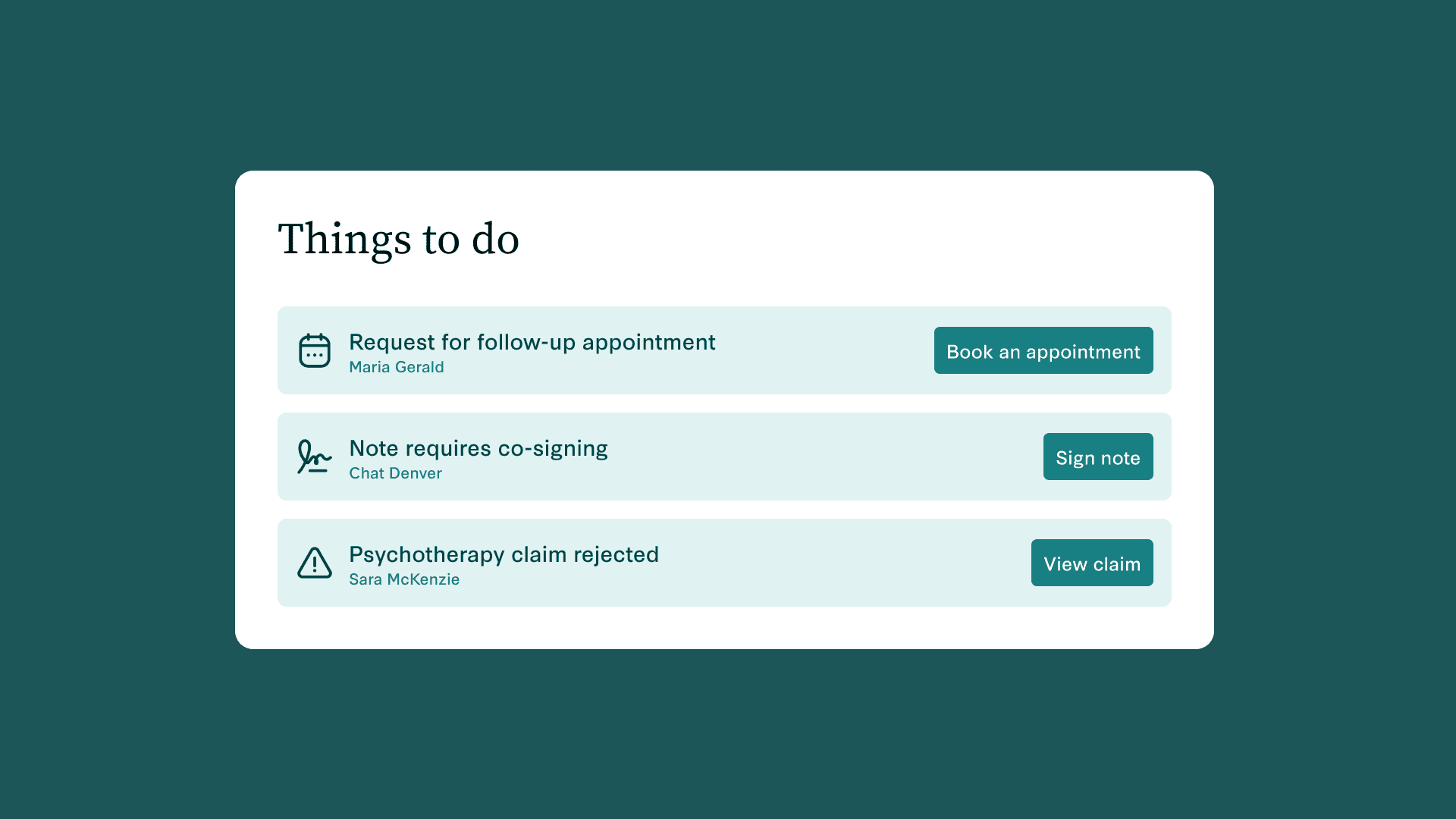
You need four things: an EHR with scheduling, documentation, and billing built in; a HIPAA-compliant telehealth tool; a way to take payments; and a website where clients can request an appointment. Choose tools that talk to each other. Practices that buy disconnected tools spend their first year re-entering data and chasing errors.
The PrecisionMind platform combines all of these and is free for practices under 20 clinicians, which matters most in year one when every dollar counts.
Decide your rate sheet
Write down your fee for a standard session, a longer session, an intake, and a late cancellation. If you take insurance, the payer's allowed amount sets your rate for in-network clients. For cash-pay, see our guide to setting your rates; the short version is to price by value and local market, not by discount.
Build your referral streams before you need them
Most new practices get their first twenty clients from people who already know the clinician. Email every colleague from training, every supervisor, and every peer you trust, and tell them you are open. Create your directory profiles and set up your website with one page per specialty.
Launch with a manageable caseload
The instinct is to open with full availability. Instead, block more time than you think you need for the first month: intakes take longer than sessions, and the admin load is real until your workflows settle. A sustainable ramp is five to eight clients in week one, growing as your systems prove themselves.
Run the business weekly
Set one hour each week to review the numbers: sessions completed, no-shows, claims outstanding, and cash collected. Practices that fail financially rarely fail suddenly; they drift for months because nobody watched the pipeline. The PrecisionMind dashboard is built exactly for this weekly review.
Common first-year mistakes
Underpricing cash-pay sessions out of discomfort with money conversations. Waiting to apply for paneled status until after launch. Buying software piecemeal from five vendors. Skipping the treatment plan because the first month feels too busy. Each is fixable, and all are cheaper to avoid than to undo.
The reward for getting this right is real: autonomy over your clinical work, a schedule you control, and a business whose value compounds. Take the checklist one step at a time, and when you are ready, we would love to show you the platform built to run the rest of it.